Blog article • 4 min read
Missed ProcureCon Travel? Here’s what everyone was saying about AI
Missed ProcureCon Travel? Here’s what everyone was saying about AI
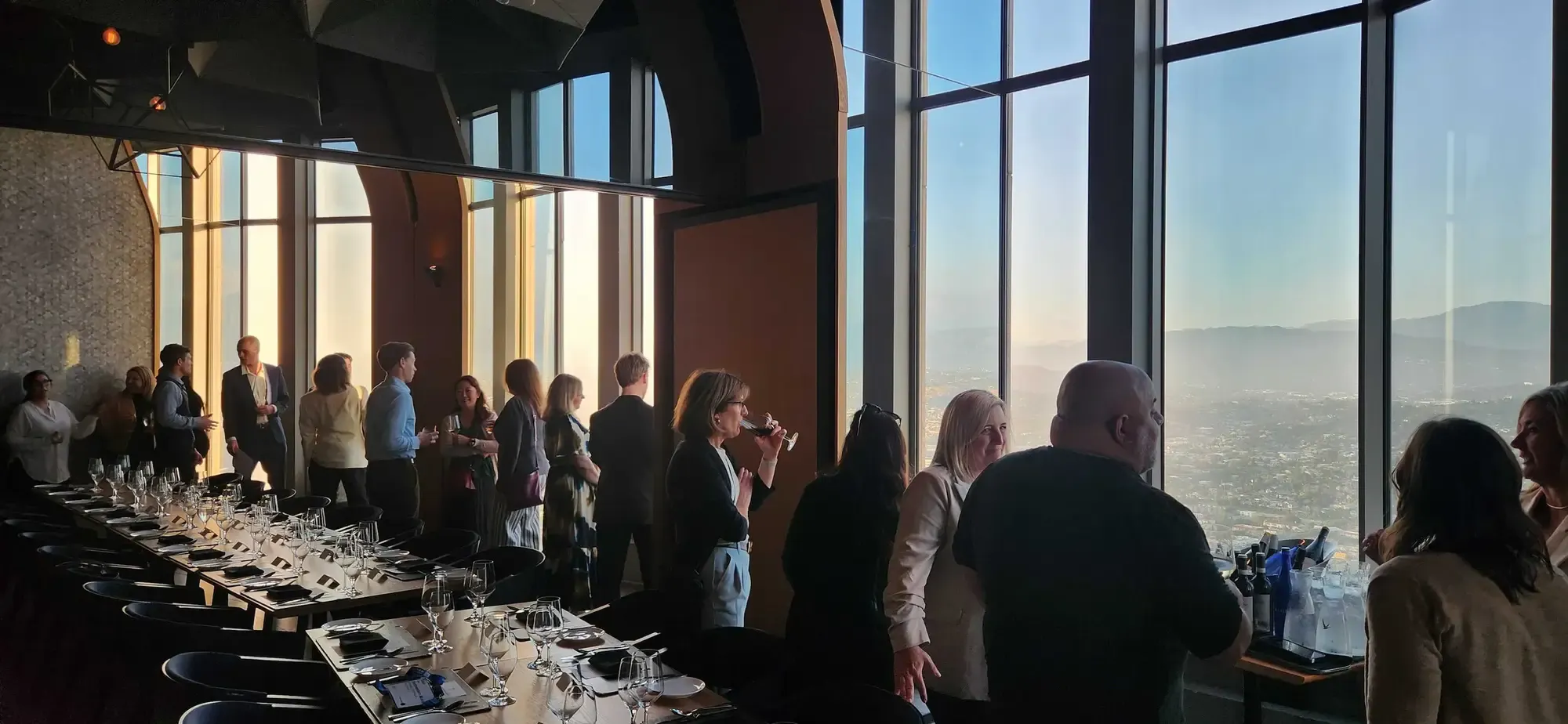
At this year’s ProcureCon Travel, one message came through loud and clear: AI is no longer a hypothetical. It’s here, embedded in the priorities, conversations, and roadmaps of travel, procurement, and event leaders alike.
When Planned first introduced agentic sourcing workflows a few years ago, we were met with curiosity and caution. Everyone saw the potential, but most felt the risk was too high. That dynamic has changed. AI was part of every single conversation in Los Angeles, with teams not just exploring ideas but actively building and deploying.
Here's a recap of the most important themes from the conference and the learnings shared during our panel with DoorDash.
The industry narrative is shifting. Fast
Companies are asking more of their travel teams than ever before—and the pressure is coming from every direction: compliance, cost control, experience, wellness, sustainability, and now, AI.
If you’re a travel manager, it’s not enough to get people from point A to B anymore. You're expected to:
- Prove the value of in-person connection
- Enforce policy without damaging experience
- Track risk, sustainability, business impact
- Do all of this across decentralized teams and tools
Here are some of the sharpest insights we heard at the show:
Return On Objectives > Return On Investments
Michell Amos, in her mindsharing session on purposeful travel, shared a critical shift in mindset: you can’t measure the value of a team offsite like a sales meeting.
The goal isn’t closing deals. It’s building alignment, connection, and innovation. The impact may take months or years to surface, which makes it harder to justify short-term. But the stakes are high. Teams are increasingly looking to AI to help measure this kind of long-tail impact, by correlating participation in key events with employee performance, retention, and engagement metrics. Or by surfacing patterns across successful teams and initiatives. Planned is actively building in that direction.
Technology has finally caught up with our expectations. This time, it's different from past waves like Big Data or blockchain.
Real-time, policy-compliant, traveler-centered
IBM’s TJ Blue said it best: "Technology has finally caught up with our expectations. This time, it's different from past waves like Big Data or blockchain." AI is proving both flexible and powerful enough to be adapted to nearly every company and every use case. Instead of retrofitting legacy systems or settling for generic tools, companies now have options that can:
- Centralize fragmented data to provide real-time, actionable insights
- Align with policy without blocking travelers
- Deliver high-quality, flexible user experiences, both digital and online
This approach is core to how Planned designs for enterprise sourcing.
Innovation is coming from startups, not legacy players
Karen Hutchings put it bluntly: "Startups are the ones pushing standards forward." She called for a future powered by agentic AI—systems that don’t just support planning, but actively help you do it. Security concerns remain, especially around data privacy, but her take was clear: they’re solvable. And the payoff is worth it.
She also reminded us of something important: "A change in travel is a change that impacts every employee." This isn’t about tweaking a policy. It’s about how people work, collaborate, and stay connected.
The bottom line? If you’re not rethinking your travel program now, you're at risk of falling behind.

Insights from the DoorDash panel
We had the chance to go deeper into all of this during our panel session with Jerome Barley, Head of Global Travel & Expense at DoorDash, alongside Planned's CEO Marc Bonin and Chief of Staff David Cottingham.
Marc opened with an observation: in an era where emails, social media, and soon even phone calls are flooded with AI-generated noise, the value of in-person is going up, exponentially. AI is automating transactional communication which makes face time, connection, and shared context more meaningful than ever.
But with that rising value comes rising pressure. Companies are leaning on travel teams to make smarter sourcing decisions, yet those same teams are still being asked the same questions over and over: Where should we go? What’s a fair price to pay for this offsite? The problem? These aren’t simple questions. And right now, most travel teams don’t have access to the data—or the insight—to answer them quickly.
The answers to simple questions like "where should we go for our offsite" are buried in spreadsheets, emails, or not captured at all. But that data is critical if you want people across the company to make smart decisions.
Marc confirmed the challenge from experience: most companies can’t confidently answer their CFO’s most basic question: "How much are we spending on meetings and events?" And that lack of visibility becomes a real problem during times of economic uncertainty, when financial accountability becomes a top-down mandate.
Jerome shared one example where a missed clause in an EA-sourced hotel contract cost the company $90,000. When planning is decentralized and unsupported, good intentions are necessary, but not enough. You can't expect occasional planners to know, understand, and remember everything. Without a system, even seasoned teams are exposed.
The panel also discussed how AI is changing what’s possible to solve the problem of informed decision-making at scale:
- It’s not just about speed. AI enables smarter, context-aware decision-making. Systems can now recommend venues based on business goals, not just event specs.
- It reduces the cognitive load. EAs and workplace teams don’t need to be contract experts if the system flags missing terms or risky clauses for them.
- It creates the foundation for strategic conversations. With the right data, travel and procurement leaders can finally quantify experience, compliance, and spend across decentralized bookings.
As Marc summed it up: "Agentic AI lets us move from reactive coordination to proactive, policy-aligned decision making."
Here is how Planned addresses that challenge:

This is exactly what we’ve built Planned to enable—a connected, intelligent way to manage meetings and events at scale, with AI embedded from the ground up.
Here’s to building what’s next—together. We’ll see you at the next conference!


